
GROWING THE FUTURE: OUR NATIVE PLANT NURSERY EXPANSION
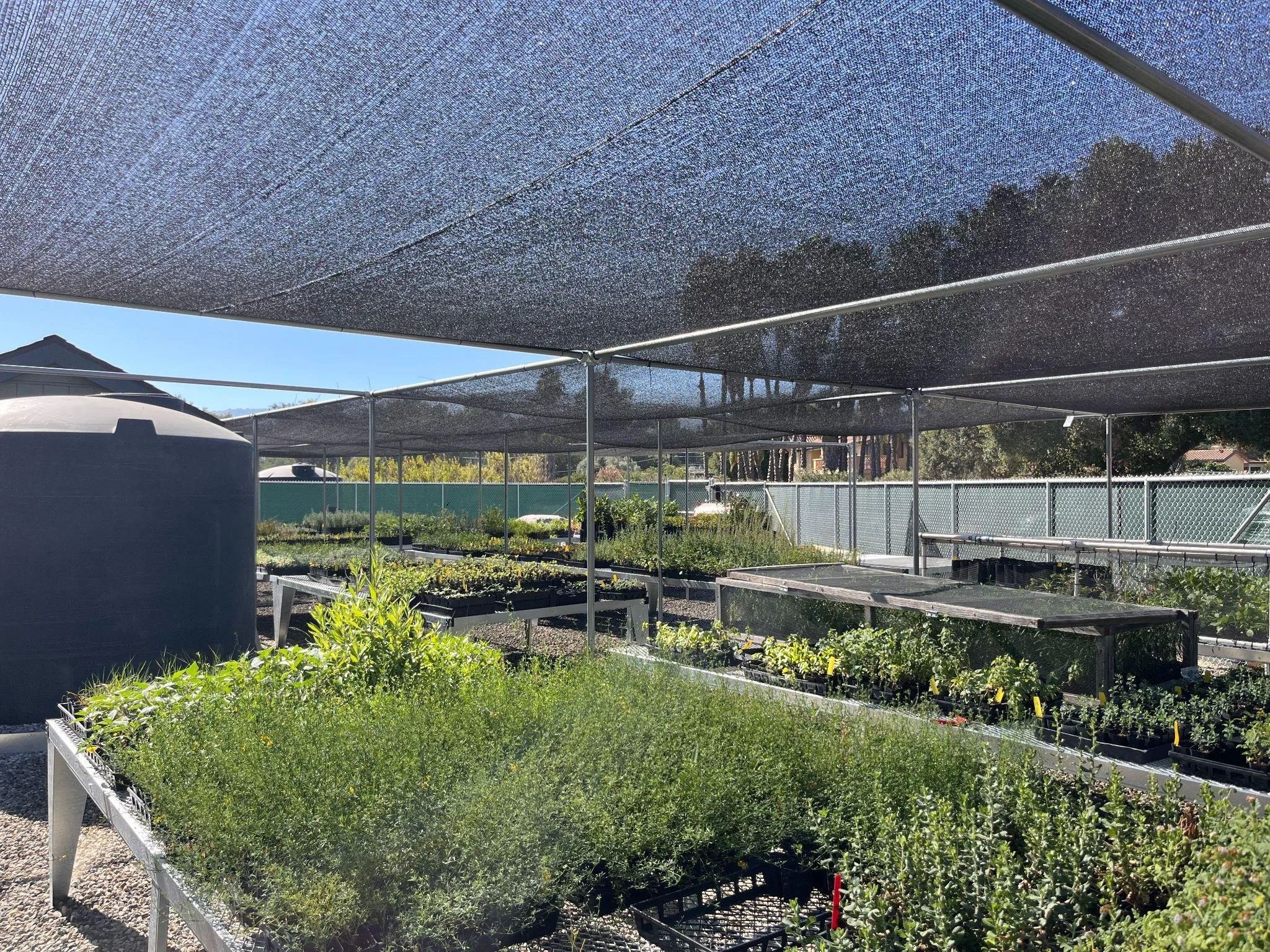
OVLC Nursery 2026. Photo by Madison Moore
After four years of planning, fundraising, and careful research, we are thrilled to share that our Native Plant Nursery has officially expanded. This milestone gives us more than just extra room to grow—it gives us the ability to work more efficiently, protect plant health more rigorously, and welcome our community in new ways. Every part of this expansion was designed with one goal in mind: growing healthy, resilient native plants that give our restoration projects the best possible chance to succeed.
PROTECTING THE ECOSYSTEMS WE’RE WORKING TO HEAL
In restoration nurseries, sanitization isn’t a nice-to-have, it’s the whole job. Our responsibility isn’t just to grow plants, but to grow plants that are healthy, resilient, and free of the pathogens that threaten natural ecosystems. Chief among our concerns is Phytophthora, a genus of soilborne water molds that thrive in wet, poorly drained conditions. One species, Phytophthora ramorum, causes Sudden Oak Death, a disease that has devastated oaks and other native trees across California’s woodlands. Because our mission is to restore and protect native habitat, the last thing we would ever want is to unintentionally introduce disease into the very ecosystems we’re trying to save.
With that in mind, this expansion allowed us to rebuild our nursery around stronger biosecurity from the ground up. Improved drainage and a cleaner growing surface throughout the nursery reduce standing water and limit how pathogens can spread between plants. We’ve also gained the space to properly separate and elevate our plant blocks, which cuts down on cross-contamination between batches. At every entry point, staff, volunteers, and visitors now clean their footwear before entering growing areas, and our sanitization routines for tools and surfaces have never been more thorough. Together, these changes move us much closer to formal accreditation through UC Davis’s Accreditation to Improve Restoration (AIR) program, which sets the Best Management Practices that guide restoration nurseries like ours nationwide.
WORKING SMARTER BEHIND THE SCENES
A lot of what makes a nursery successful happens quietly, in the day-to-day process of preparing soil, cleaning seed, and starting new plants. Our expansion let us rethink several of these processes so our small team can do more, more consistently. Potting medium that used to be mixed by hand can now be blended uniformly, giving every plant a more consistent start.
Seed cleaning, once done entirely by hand, is becoming faster and more precise, which means better germination and healthier seedlings down the line. And where we once relied on time-consuming bleach baths to sanitize pots and tools, we’re now able to use high-temperature steam, a faster and far less chemical-intensive way to eliminate soil-borne pathogens and keep our stock clean.
We’re also improving how our youngest plants get their start. Gentle, consistent warmth at the root zone helps seeds germinate more evenly and encourages stronger early root development, especially during our cooler months, while helping prevent the damp conditions that can lead to fungal disease. None of these changes are flashy on their own, but together they add up to healthier plants, less waste, and a lot more capacity to serve our restoration projects.
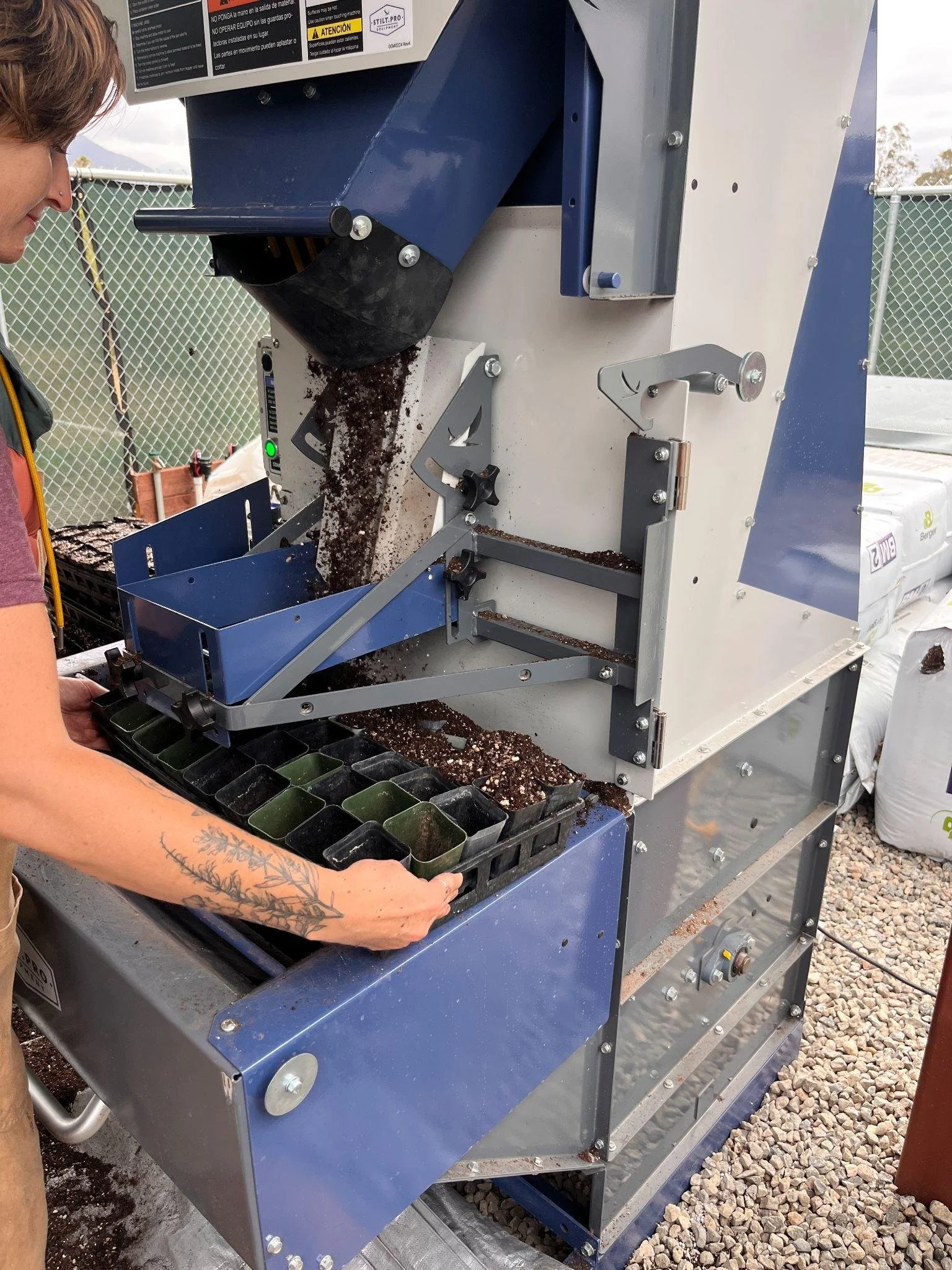
Soil mixer and potting machine at the nursery
INVESTING IN WATER AND ENERGY EFFICIENCY
Water management has been reimagined throughout the expanded nursery. Rather than relying on a single hose, watering access is now spread across the space, with plans for timed irrigation that reduces both labor and water waste while keeping plants consistently and evenly watered. Elevating our irrigation system also has a biosecurity benefit: it keeps water and equipment from contacting contaminated soil, lowering the risk of spreading pathogens between growing areas.
Looking ahead, we’re also planning to bring solar power into the nursery to help run irrigation pumps and daily operations. As we’ve grown, so have our energy needs, and transitioning toward renewable power will make us more self-sufficient, reduce our long-term operating costs, and keep critical systems like irrigation running even during power outages, all while shrinking our environmental footprint.
A GATHERING PLACE FOR THE COMMUNITY
Native plant restoration depends on more than healthy plants, it depends on an informed and engaged community. That’s why this expansion includes a dedicated outdoor gathering space where volunteers, students, restoration practitioners, and neighbors can come together for workshops, training days, and hands-on learning. We’re excited to grow our educational programming, deepen partnerships with local schools and conservation groups, and help inspire the next generation of environmental stewards.
Just next door, we’re also developing a demonstration garden that will showcase the beauty and diversity of California’s native plants. Visitors will be able to walk among mature native plantings, learn about water-wise, wildlife-friendly landscaping, and see firsthand how the techniques we use in restoration canbe applied right at home. It’s a living classroom, and one more way we hope to turn appreciation for native plants into action.
None of this would have been possible without the generosity of our funding partners, donors, volunteers, and community members who believe in the importance of native plant restoration. We’re especially grateful to the skilled local contractors who helped bring this vision to life, including Nick DeYoung, Nick Wingate, Dan Colbeck, and Bill Millet, and to CAL FIRE and our many other donors, whose support made these improvements possible. Their investment in our nursery is an investment in healthier and more resilient natural ecosystems, and the future of community-led ecological restoration and the Ojai Valley.