Herbicide Application – Russian Knapweed, Bristly Ox Tongue & Bermuda Grass
Partial Preserve Closure:
Tuesday, August 4 & Wednesday, August 5, 7am–5pm each day
Invasive plant management is an essential pillar of restoration. Without the removal of noxious weeds, creating space for diverse flora and fauna is impossible. There are many methods of managing invasive plants, all of which OVLC has utilized according to the nuances of each plant and the condition of the site. This year, OVLC is expanding its treatment efforts at the Ojai Meadows Preserve to address three invasive species: Russian knapweed (Rhaponticum repens), bristly ox tongue (Helminthotheca echioides), and Bermuda grass (Cynodon dactylon).
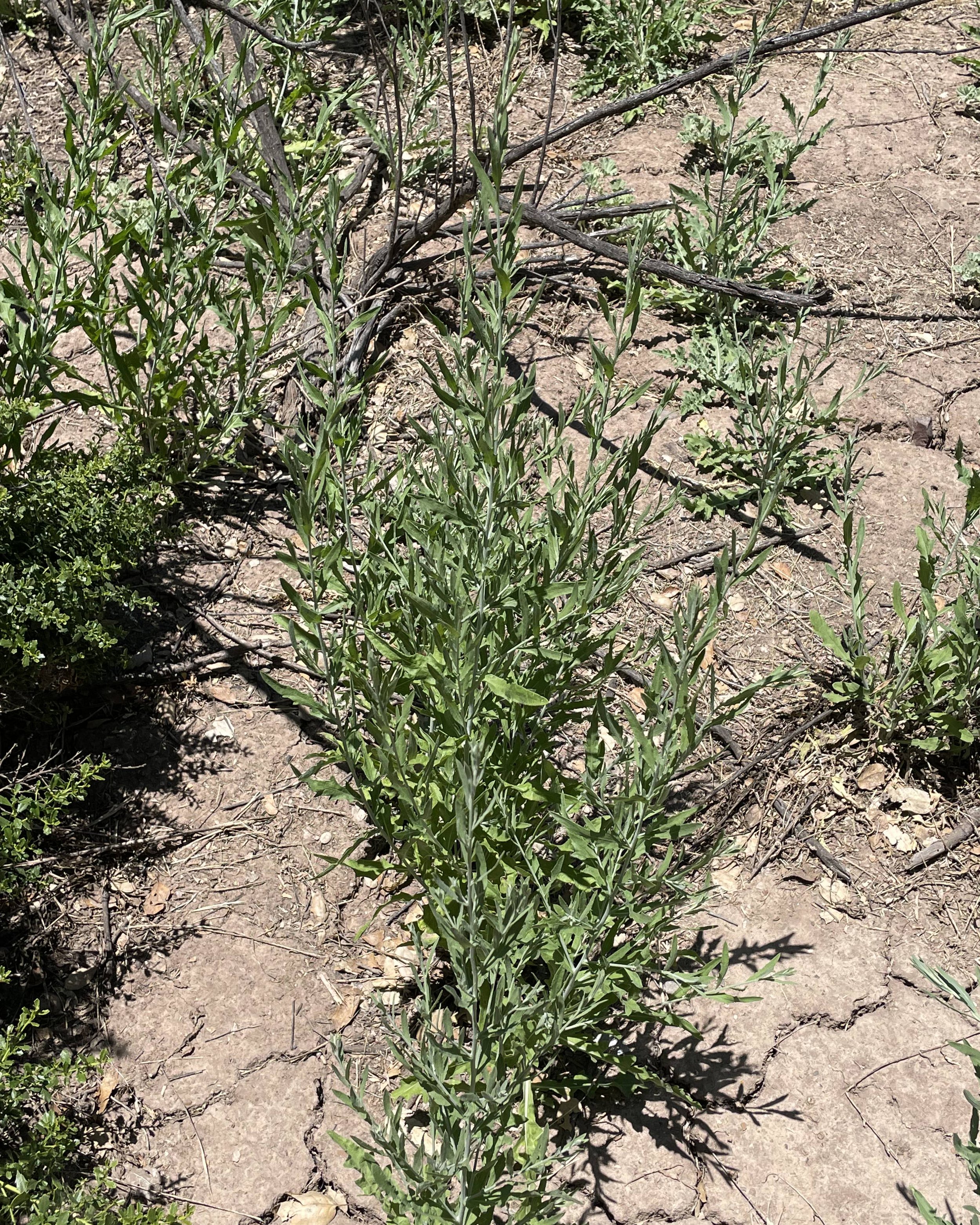
Russian knapweed
Russian knapweed has established itself at the Preserve over the past couple of decades. According to the California Invasive Plant Council, it is poisonous to most animals and has allelopathic properties, meaning it prevents other plants from growing around it by pulling toxins from the soil and concentrating them at the surface. The plant spreads through rhizomes—creeping roots that form a complex matrix under the soil and tap into deep pockets of groundwater, drawing it away from the root systems of native species. OVLC worked for years to control this population by hand pulling, weed whacking, and sheet mulching, but these efforts barely made a dent. After consulting with qualified biologists, OVLC began targeted herbicide treatment in 2024. This will be the third and final scheduled treatment; OVLC will continue monitoring the population for three years to assess long-term effectiveness.
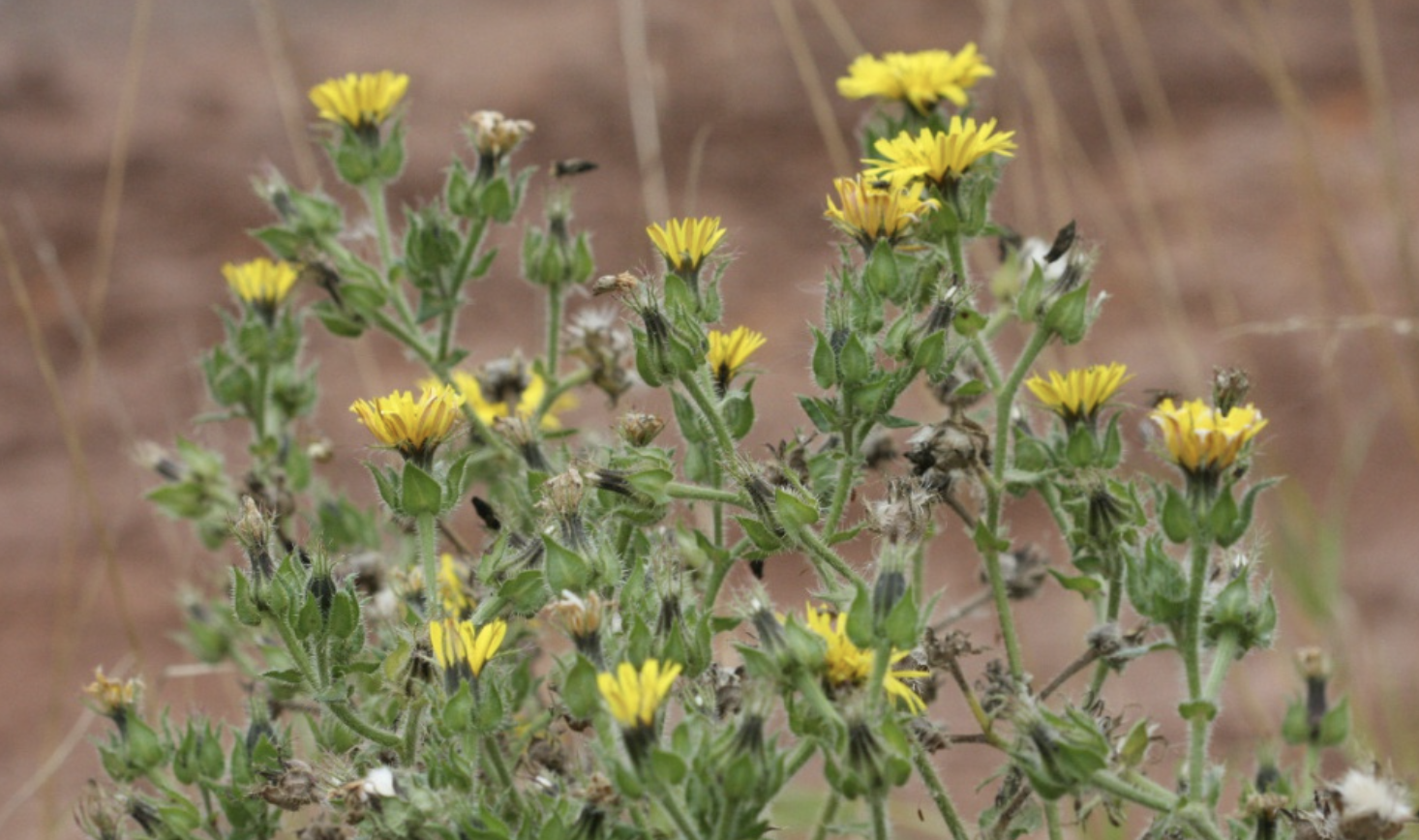
Bristly oxtongue is a fast-spreading nonnative plant that has taken hold across roughly two acres of the Preserve, encroaching on restoration sites along the canal corridor. Left untreated, it outcompetes native grasses and forbs for light, water, and space. This will be the first herbicide treatment of this population at the Preserve, following targeted weed whipping earlier in the season.
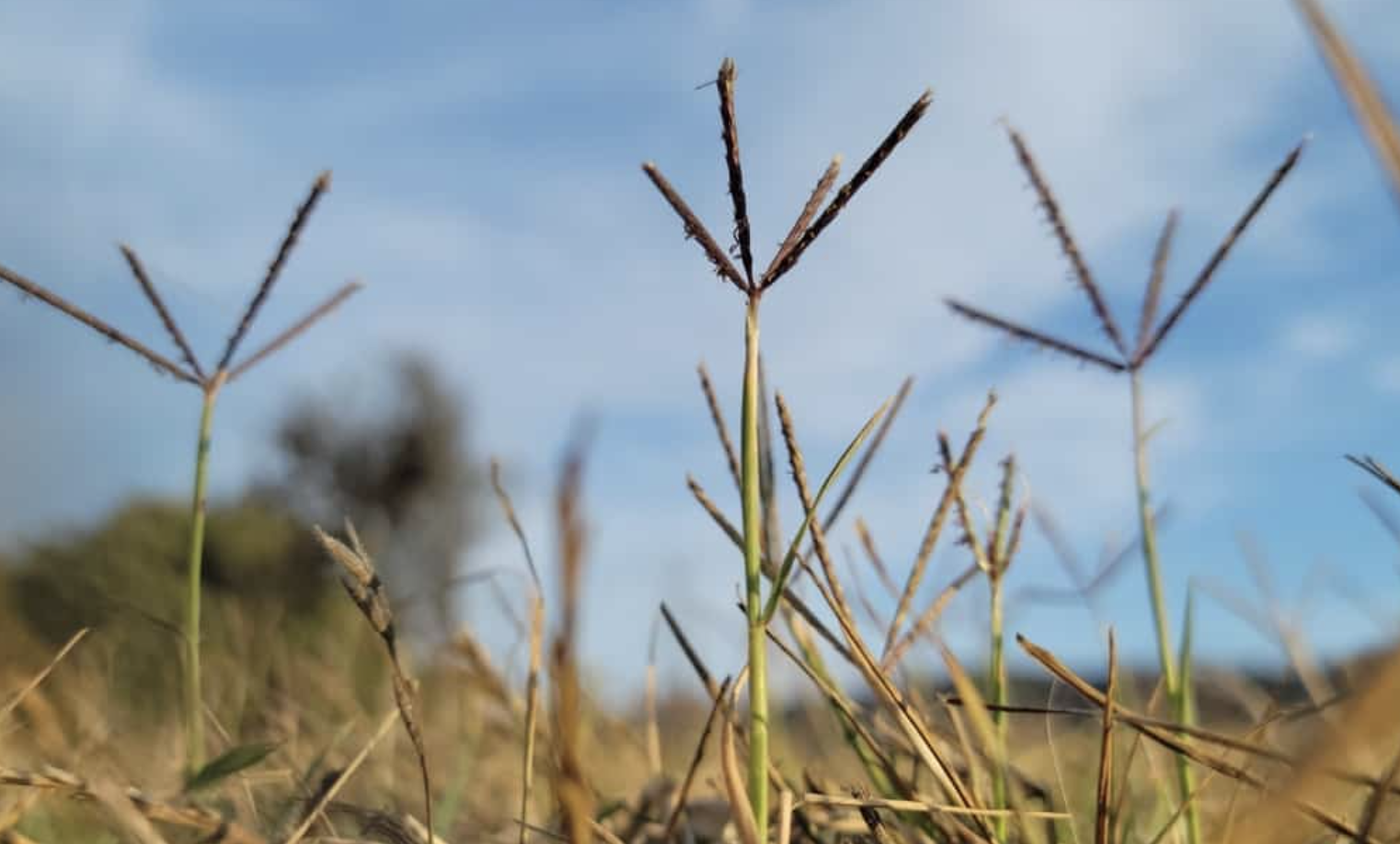
Bermuda grass
Bermuda grass is a small but aggressive invasive patch near the restoration site that spreads rapidly through rhizomes and stolons, crowding out native plantings. This will also be its first targeted treatment.
It is important to note that herbicide use in restoration is a targeted, species-specific tool, not a blanket application. A licensed applicator and trained crew will apply selective foliar treatment directly to each target plant, taking care to avoid native vegetation, including young and mature oaks and other native species scattered throughout the project site. Treatment is scheduled for early August, a period of naturally lower visitation due to summer heat.
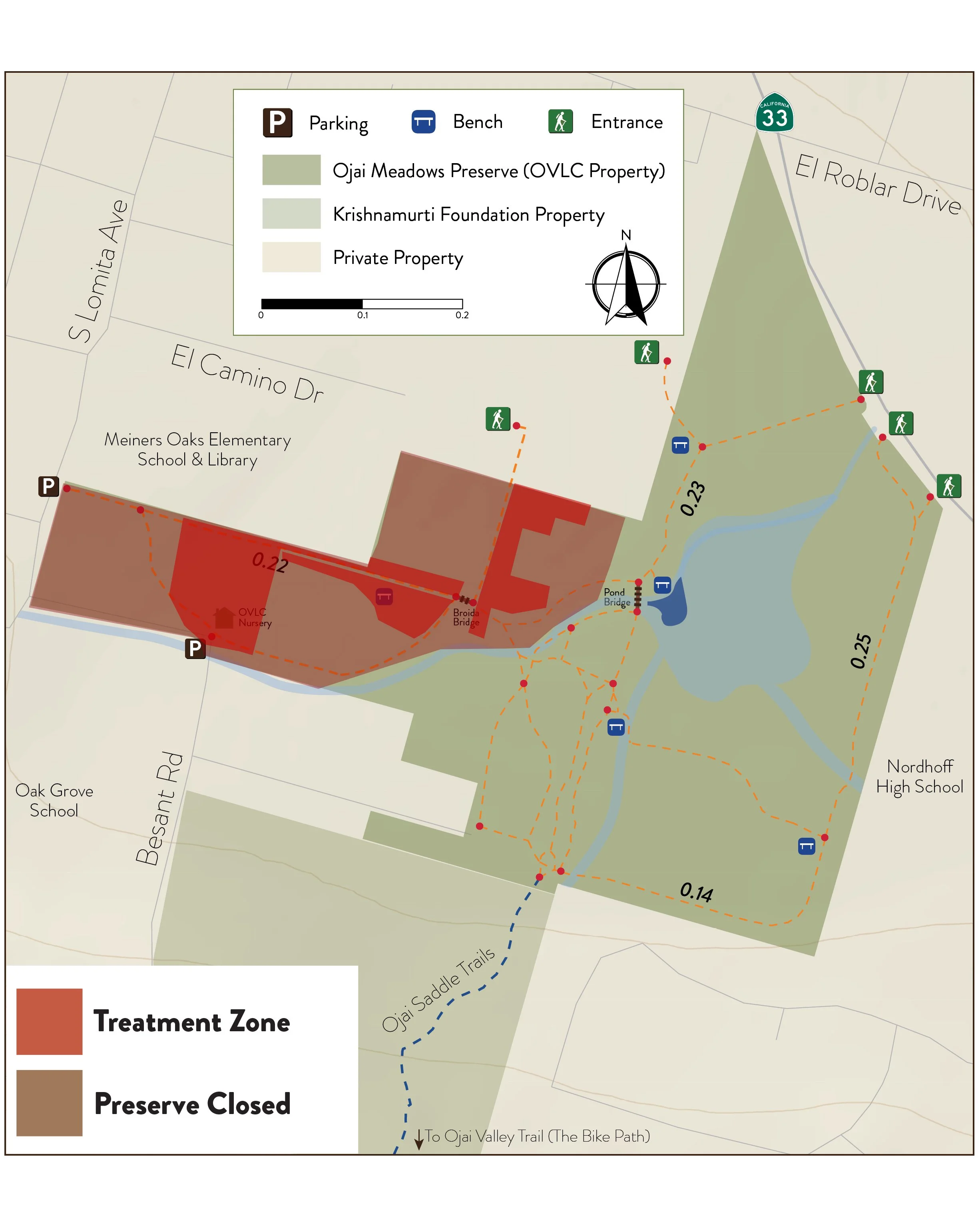
To keep the treatment area clear during application, the Lomita Ave. and Besant Rd. entrances, and trails around the treatment zones, will be closed each day of treatment from 7am–5pm. You can still access the eastern side of the preserve from the Maricopa Highway entrances. Trails near the work areas will be blocked off, and docents will be on-site to help direct visitors. Please see the map posted nearby for exact closure boundaries.
Once these populations are controlled, OVLC will continue restoration efforts with a diverse array of native plants that restore soil structure, increase water infiltration, provide seed for nursery propagation, and create habitat for hundreds of living beings.
Have questions or concerns? Contact us at info@ovlc.org / (805) 649-6852