
ORCHARDS TO OAKS
Photo by Emily Ayala
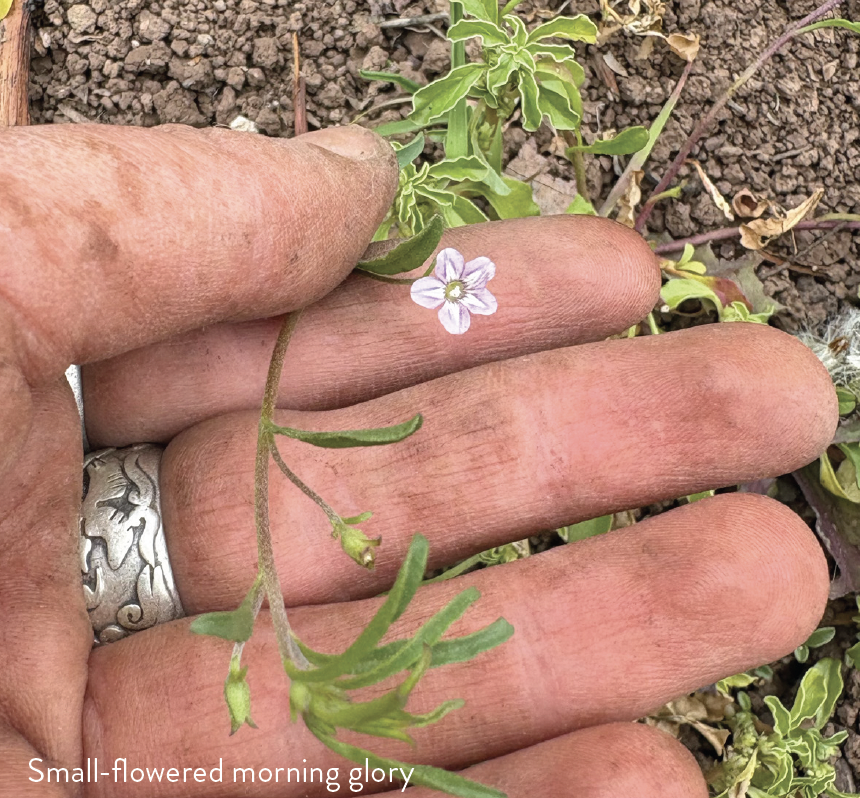
The restoration team was weeding between plantings, focusing on our target species. Mustards and thistles occupied our minds and hands. It is a low grasp, at the base of the weed where the shoot becomes root, and then a slow pull. If it is too quick, the root snaps and the plant grows back—somehow with even more vengeful vigor. If it is too slow, the site never shifts to native canopy. So, the weed’s roots unravel from soil, and the index fingers callus. I grabbed and pulled, combing through a thick section of young plants, until I found an unusual plant. At first thought, this was a prostrate knotweed. It was not. The low growing plant was a few inches long, with cupped, delicate, bindweed flowers. It was a sweet plant, and one I had not seen before. As it lay in my hand, I realized I’d found a small-flowered morning glory—one of the few with such a limited range.
Though the site was covered in avocado trees and some bald patches of weeds, this plant, and other locally significant plants, speckled between rows. Witchgrass spritely laughed in the language of wide whimsical inflorescences. Prostrate amaranth crawled and carpeted the clay wet ground. Small oaks stitched the rows together. All of this whispered of a story. These plants wait, stunted in individual growth or population size. These living things, shadowed by shivering avocado leaves, are small solutions to big problems. We know the story of climate change, the context and cycle that it has created. Microclimates shift, water rates increase, biodiversity is lost, fires run hotter, longer, more frequent, and the floods are of biblical proportion. Not to be alarming, this causes three distinct issues in our valley—ecological type conversion, agricultural land conversion, and communal existential dread. This means the native plant communities shift to nonnatives, agricultural crops become unviable in new climates, and we, together, are anxious. These symptoms are felt deeply, and they ripple through the landscapes of the ecological, agricultural, and mind landscapes.
With this, I must remind you, dear reader, of a solution. This is not THE solution, but a string in the web that fetters these dreadful feedback loops. Habitat restoration is the act of repairing degraded ecosystems to native habitat—typically using the yin and yang of native plant installation and invasive plant removal. For habitat restoration to work, we must observe the land and cultivate the skills, relationships, and commitments that turn restoration from an idea into a lived practice.
Ojai Valley Land Conservancy (OVLC) has been doing restoration for decades now, informed by many consultants, ecologists, land managers, and community members. In our records, we watch the photo points and transects turn back to native cover. On our field days, we see roadrunners protect their land, bobcats pass through greenways, and birds migrate atop coyote brush and toyon. In the community, the shared memory is held in daily walks and hikes. However, we know there is so much more than OVLC land. We know that nature (seeds, wind, and skunks alike) does not often stop at property lines.
Led by many long discussions, mapped minds on whiteboards, stitched together interviews, questions, and data, OVLC offers Private Lands Restoration under the program of Rewild Ojai. It is distinct from Rewild Ojai certified gardens, as it is active restoration occurring typically on highly denuded or transitioning agricultural lands. These areas stitch together habitat across the Wildland Urban Interface. When land is at risk for productive or ecological decline, whether that be on the crop borders, sections of orchards, or whole swaths of land, restoration offers land owners a practical path forward. OVLC assists with restoration planning and implementation, tailoring the plans to the land’s nuances. The next step is restorative work for all things. The nursery stock must be grown, observations made, cultural shifts shared, and knowledge exchanged. This ecological literacy will be nurtured and watered by participation, education, and care.
These moments of learning to move in rhythm with nature’s cycles ask us not only to act, but to notice small indicators across the land that whisper stories, guide our hands, and shape the restoration we undertake. Just as a single morning glory surprises among thistles, every deliberate act of care, observation, and planting becomes part of the web of resilience.
Sophie McLean, Native Plant Specialist & Nursery Manager
Are you considering restoring your land?