Stewardship is about more than maintaining trails; it’s about building resilient landscapes and healthy communities through consistent, hands-on care. Every season brings new opportunities to learn, adapt, and collaborate, and partnerships play an important role in that work.
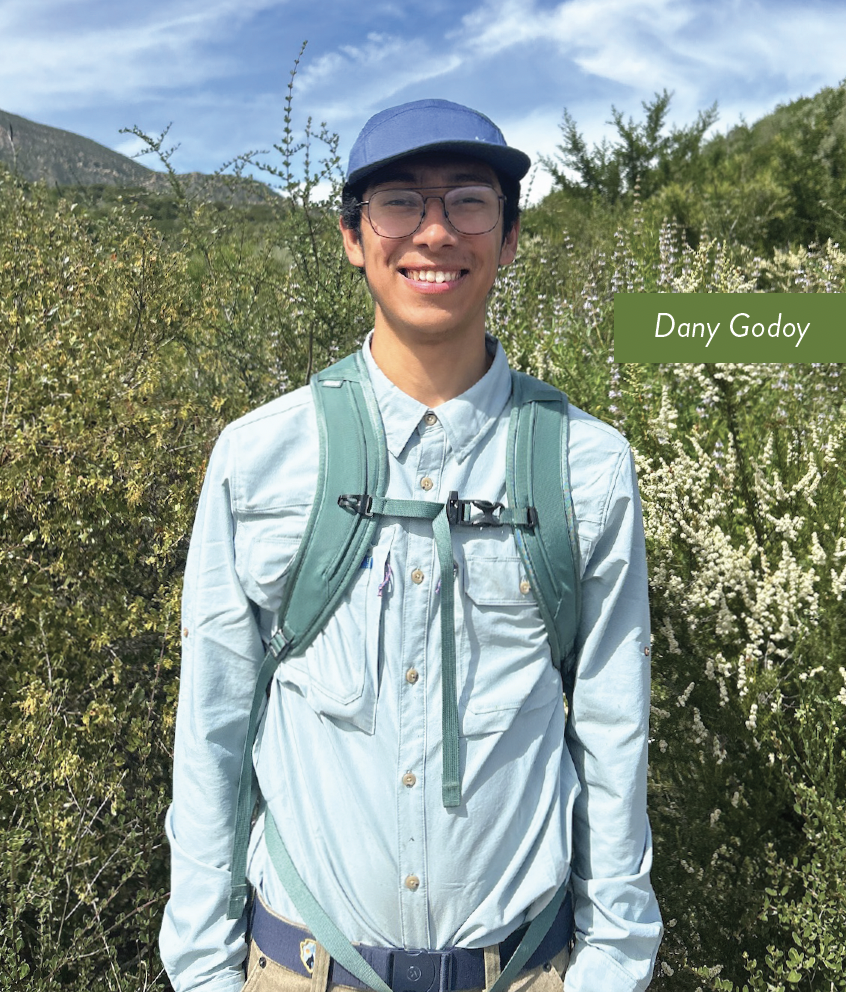
Over the past several months, California Climate Action Corps Fellow Dany Godoy has been working alongside Preserve Manager Linda Wilkin nearly every Friday, supporting stewardship projects across OVLC’s preserves. From caring for stewardship native plantings and nursery work to wildfire resilience planning, vegetation monitoring, and volunteer events, Dany has become an integral part of the stewardship team while gaining firsthand experience in land management.
Linda recently sat down with Dany to talk about his path into conservation, what stewardship has taught him, and why building wildfire resilience starts long before a fire begins.
Linda: Tell us a little about yourself and how you found your way into conservation.
Dany: I’m originally from West Los Angeles, and honestly, I didn’t grow up spending much time outdoors. That changed in my early twenties when my girlfriend and I decided to go camping on a whim. I fell in love with being outside, and before long I was backpacking, hiking, and exploring whenever I could.
My educational background is actually in music. I graduated from Cal State Northridge with a degree in music education, so conservation wasn’t originally part of my career plan. But the more time I spent outdoors, the more I realized I wanted my work to have a direct impact on the environment and the people who depend on it.
Linda: You’re part of the California Climate Action Corps. Can you tell us about the program?
Dany: California Climate Action Corps is a statewide AmeriCorps program that places fellows with organizations working on climate solutions. Fellows focus on areas like wildfire resilience, urban greening, and edible food recovery.
I first learned about the program through an online posting shortly after graduating from college. It seemed like the perfect opportunity to combine my passion for the outdoors with meaningful public service. I’ve been incredibly grateful for the chance to work with so many different organizations and professionals across Southern California.
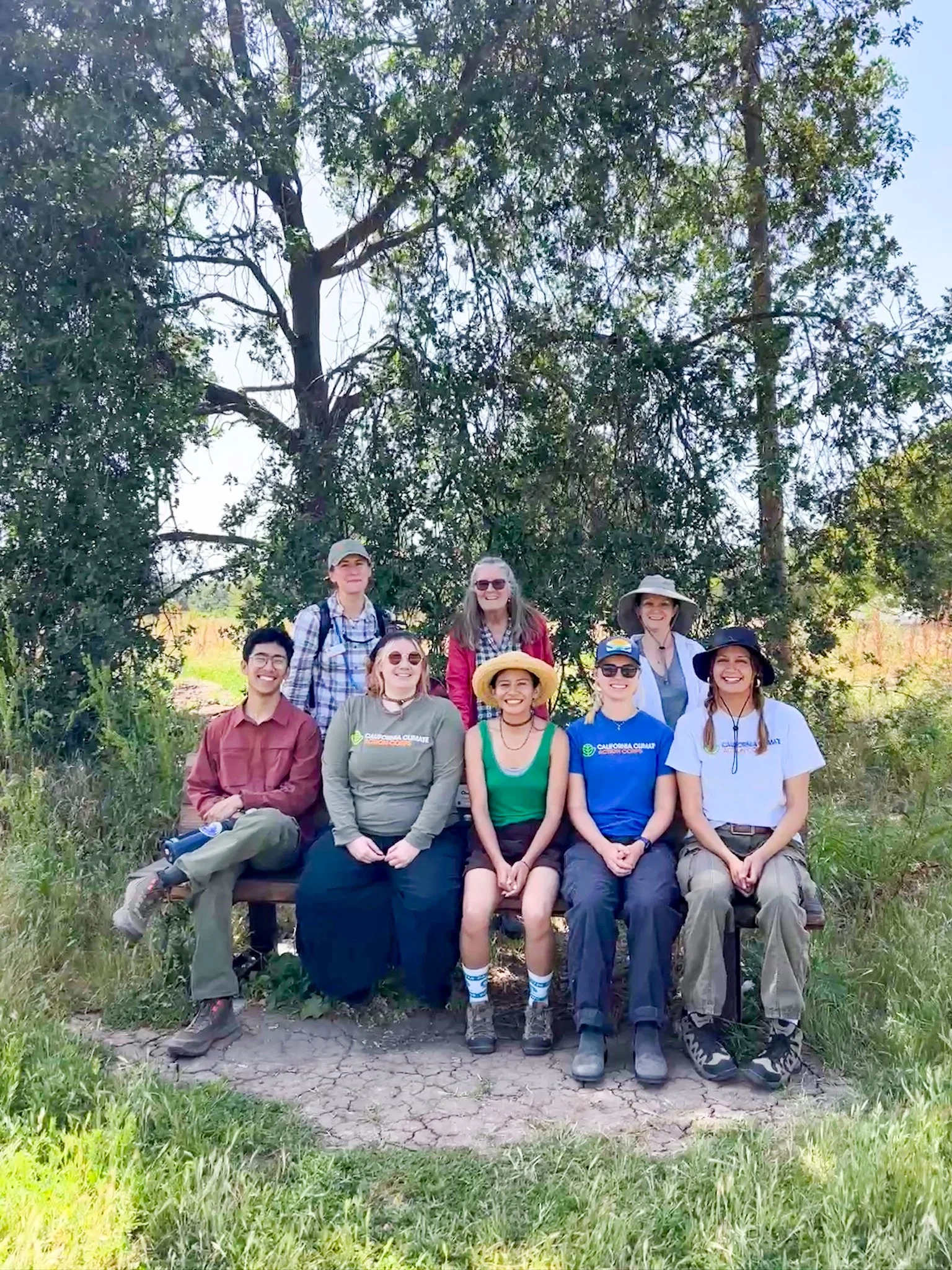
Above: Dany and Preserve Manager Linda Wilkin (left to right), joined by fellow California Climate Action Corps members and volunteers at Ojai Meadows Preserve.
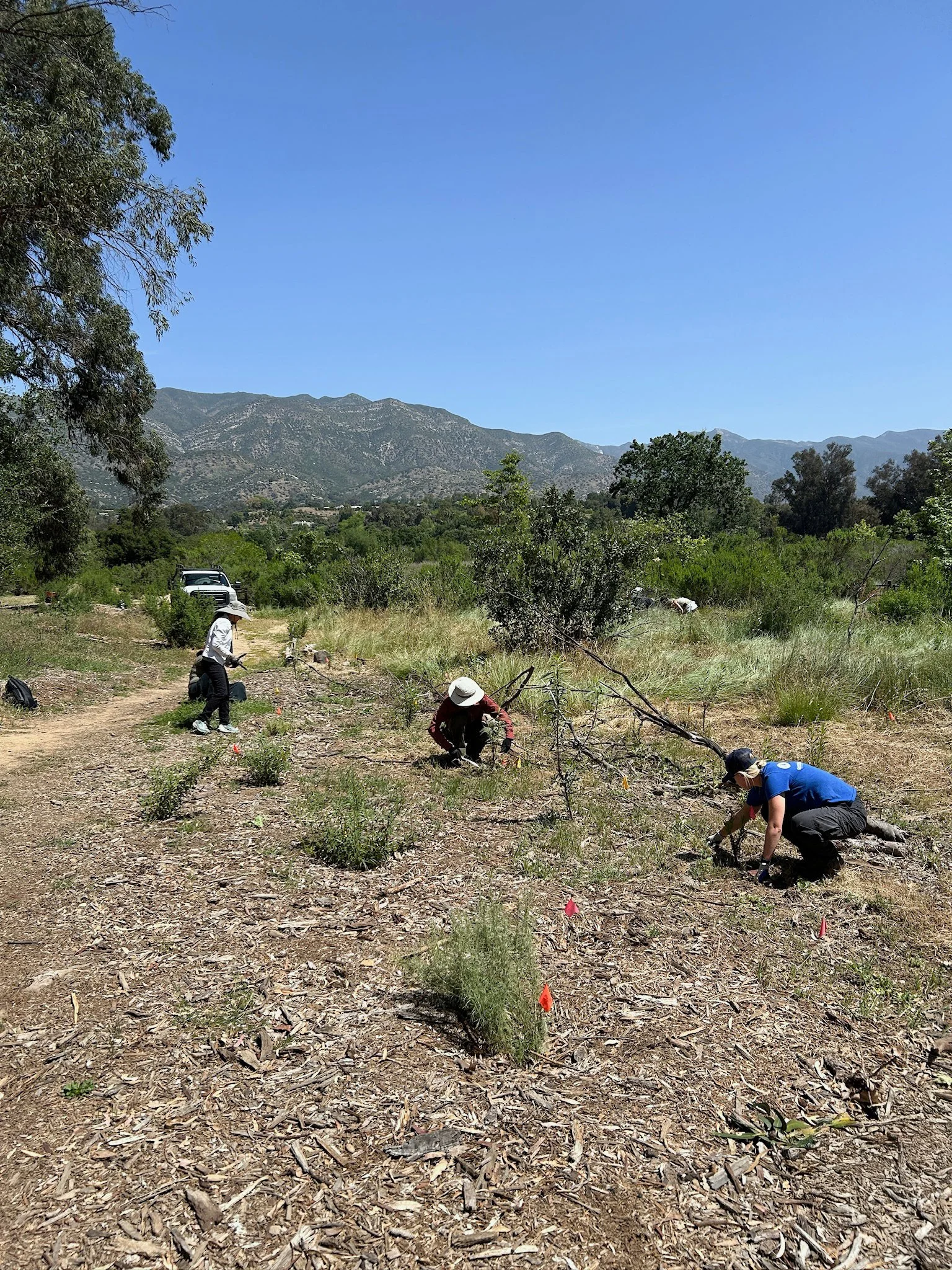
Below: Volunteers remove non-native plants during the group’s volunteer day at Ojai Meadows Preserve.
Linda: One of the projects you’ve been involved with is post-fire tree monitoring following the Los Angeles fires. What has that work involved?
Dany: I’ve been helping with a U.S. Forest Service study examining how urban trees respond after wildfire. We measured tree diameter, canopy size, canopy dieback, and overall condition in neighborhoods affected by the fires.
One of the most interesting things we’ve seen is how differently individual tree species respond to fire. We’re also documenting trees that were removed after the fire and collecting long-term data that will help researchers better understand how urban forests recover.
The project has also been meaningful because residents often stop to ask what we’re doing. Many people want to understand what happened to their neighborhoods, and it’s rewarding to know this research will help answer some of those questions.
Linda: What kinds of projects have you been helping with at OVLC?
Dany: Every Friday is a little different, which I really enjoy. I’ve helped with fire fuel management, restoration planting, invasive weed removal, nursery work, tree inventories, monitoring, and volunteer events.
One of my favorite projects has been working at Ojai Meadows Preserve. Seeing hundreds of native plants become established and watching volunteers come together to improve the landscape has been incredibly rewarding. It’s exciting knowing these projects will benefit both wildlife and the community for years to come.
I’ve also worked alongside the stewardship team developing photo monitoring points throughout our fire clearance areas. Having consistent monitoring locations allows us to document changes over time and helps us evaluate whether our management practices are accomplishing what we hope they will.
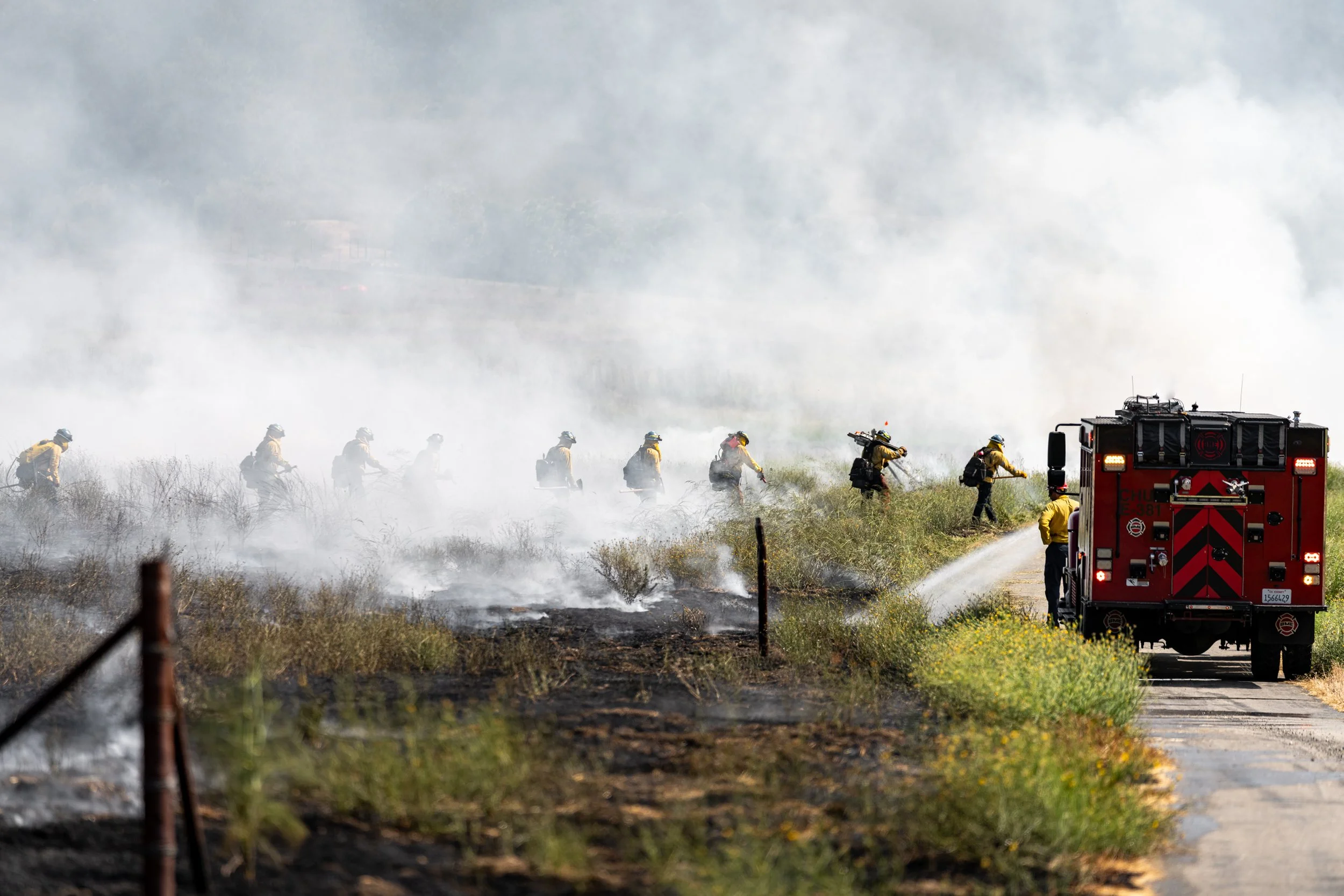
OVLC and partners conducted a prescribed burn at the Ventura River Steelhead Preserve on June 24, 2026, targeting invasive species like yellow star thistle to support long-term wildfire resilience. Photo by Ethan Van Dusen.
Linda: You also spent time working in our nursery.
Dany: That was a great learning experience because my background isn’t in environmental science. I learned everything from transplanting seedlings and up-potting plants to nursery organization and propagation techniques.
It’s been interesting comparing how different native plant nurseries operate. Every organization has its own approach, and being able to share ideas between programs has been one of the most valuable parts of this fellowship.
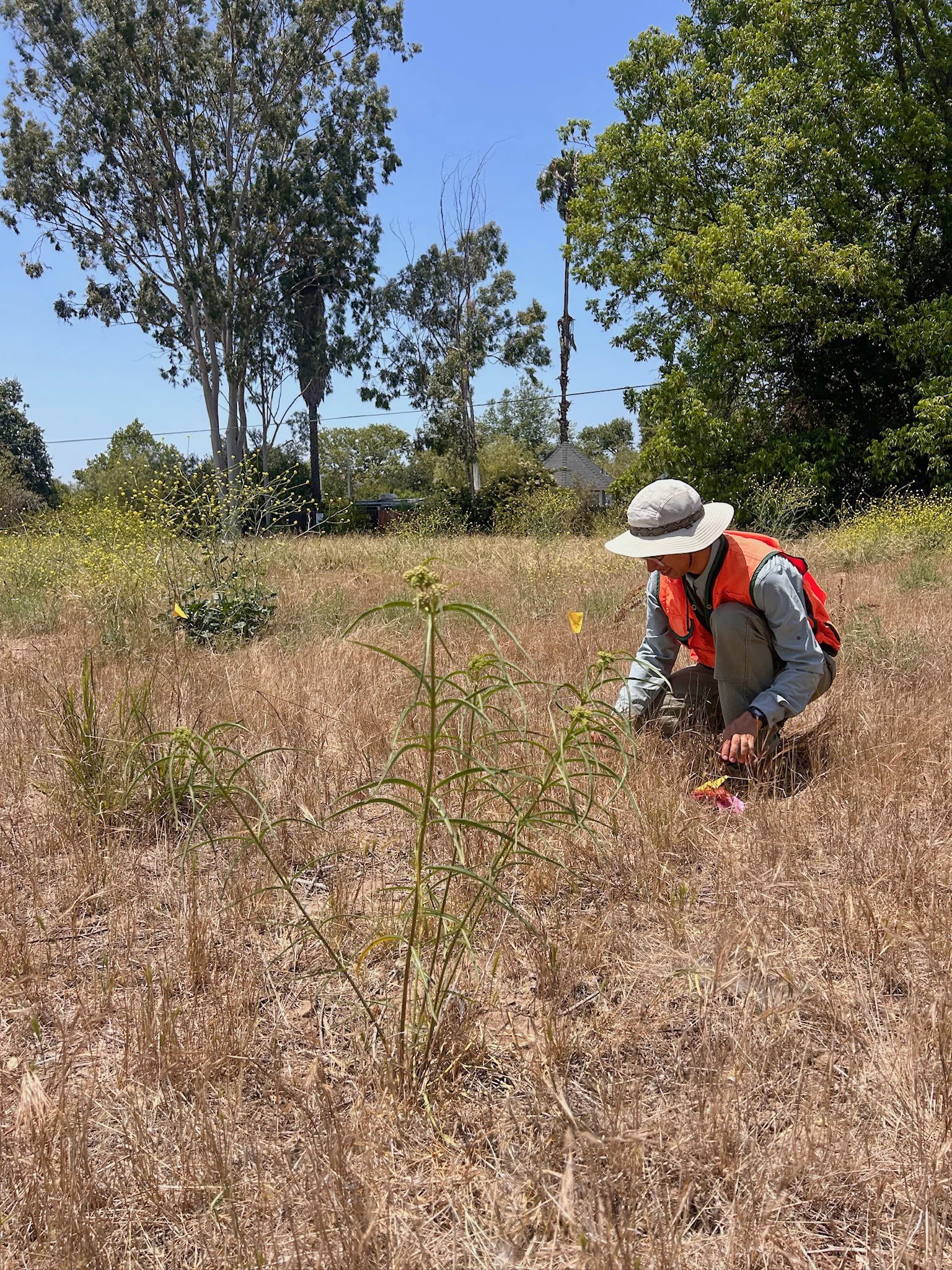
Above: Dany works at a restoration site where narrowleaf milkweed, planted as part of the project, grows in the foreground.
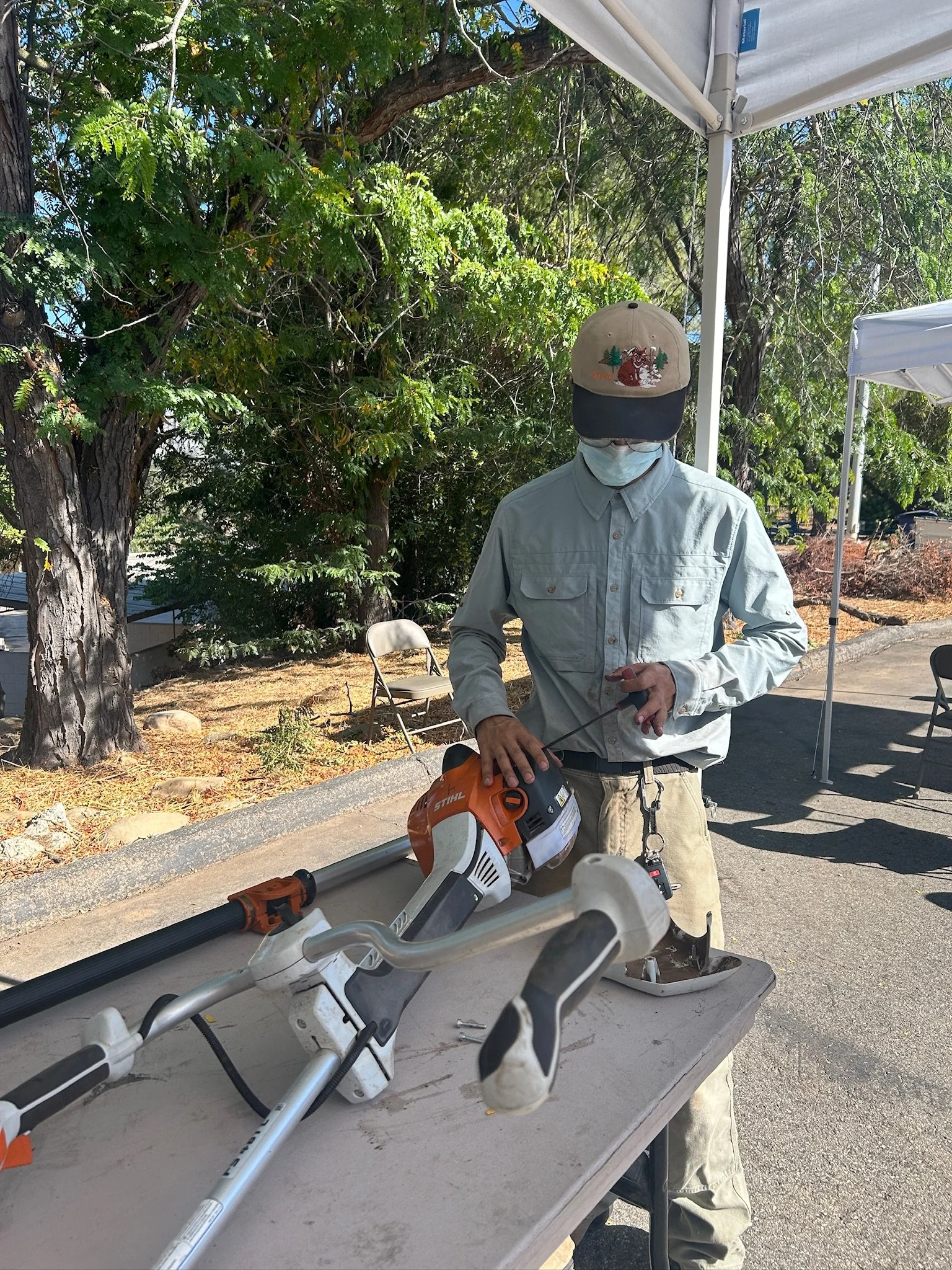
Below: Dany performs routine maintenance on his weed whacker between projects.
Linda: Earlier this year, you led your fellow Climate Action Corps members during a volunteer day at Ojai Meadows Preserve. What was that experience like?
Dany: It was really rewarding to introduce my fellow Climate Action Corps members to OVLC and the work happening here. We volunteered on restoration projects, toured the preserve, and visited the nursery.
Many of them had never been to Ojai before, so it was exciting to share the work OVLC is doing to restore habitat while improving public access. Everyone left inspired by how much can be accomplished through partnerships and community involvement.
Linda: You once told me about the backpacking trip that helped shape your career path. Can you share that story?
Dany: My girlfriend and I were on our first backpacking trip in Topanga the night before the Palisades Fire started.
The winds were incredibly strong, and even before the fire began, I remember noticing how dry the vegetation was. We packed up early the next morning because the conditions felt unsafe. About ten minutes after we reached a coffee shop, the Palisades Fire ignited.
That experience changed the way I thought about wildfire. It made me realize I wanted to dedicate my career to helping communities become more resilient. It wasn’t a career path I expected, but looking back, it feels like everything pointed me in this direction.
Linda: Wildfire resilience is a term people hear a lot, but it can mean different things depending on who you’re talking to. What does it mean to you?
Dany: To me, wildfire resilience means helping our communities live with fire rather than simply reacting to it. In California, wildfire is a natural part of the landscape, but over time we’ve changed how the land functions. Stewardship is about restoring some of that balance. That includes maintaining healthy native plant communities, reducing hazardous fuels where appropriate, restoring habitat, creating defensible space around homes, and helping people understand how they can prepare before a fire happens. It’s also about working together. Fire departments, land managers, volunteers, homeowners, and community organizations all play a role.
Linda: One thing I’ve appreciated while working on our fire clearance projects this year is seeing how stewardship can be more intentional with our fire clearance. We’ve been protecting native milkweed, monitoring trees, sharpening our pruning and arborist skills, and thinking carefully about where habitat can remain while still reducing fire risk.
Dany: Exactly. Fire clearance isn’t just removing vegetation. It’s understanding which plants provide habitat, which species increase fire risk, and how we can manage the landscape in a way that’s both safer and healthier. That’s where monitoring becomes so important. If we collect good data year after year, we can make better decisions instead of relying on assumptions.
Linda: What has surprised you most about working in stewardship?
Dany: How many different skills come together in this work.
Some days you’re restoring habitat. Other days you’re monitoring vegetation, maintaining trails, operating equipment, talking with visitors, or leading volunteers. Every day is different.
One thing that’s really stood out to me is how stewardship connects people to the land. When volunteers spend time restoring a trail or planting native species, they become invested in protecting those places.
I’ve learned that stewardship isn’t just about maintaining trails for recreation. Those trails can also serve as maintained fuel breaks. Because people regularly use them, vegetation stays lower and discontinuous. That’s one example of how recreation and conservation can actually support one another when they’re managed thoughtfully.
Linda: Your dad taught you a lot of practical skills growing up. Have those been useful?
Dany: Absolutely. My dad worked as a general contractor, so growing up I was always helping on job sites and learning how to use tools.
At the time, I didn’t always appreciate it, but now I use those skills constantly. Whether it’s troubleshooting equipment or figuring out the best way to complete a project, those lessons have carried over into stewardship work more than I ever expected.
Linda: Looking ahead, what are you most excited about?
Dany: I’m excited to return for another California Climate Action Corps term and continue working with OVLC. I’d like to earn my wildland fire Red Card certification, keep building my plant identification skills, and continue learning from everyone I’ve met through this fellowship.
Every organization I’ve worked with has taught me something new, and I’m excited to keep growing.
Linda: I always like to ask, what gives you hope?
Dany: The people. My family, my coworkers, my fellow Climate Action Corps members, and everyone I’ve worked with have encouraged me every step of the way. They believed in me even when I was changing careers.
Professionally, I’m hopeful because more people are recognizing that wildfire resilience takes all of us. Land managers, firefighters, volunteers, homeowners, Indigenous communities—we all have a role to play.
If we continue learning from one another and working together,I think California has a bright future.
Linda: Dany’s enthusiasm, curiosity, and willingness to jump into every project have made him a valued member of the OVLC stewardship team. We’re grateful for everything he’s contributed this year and looking forward to continuing our partnership during his second California Climate Action Corps term and welcoming him back for another term this September.
Thank you for taking the time to share your story with us, Dany. We’re so glad to have you as part of the OVLC team, and we can’t wait to see what you accomplish next.