
Ranching at Cañada Larga
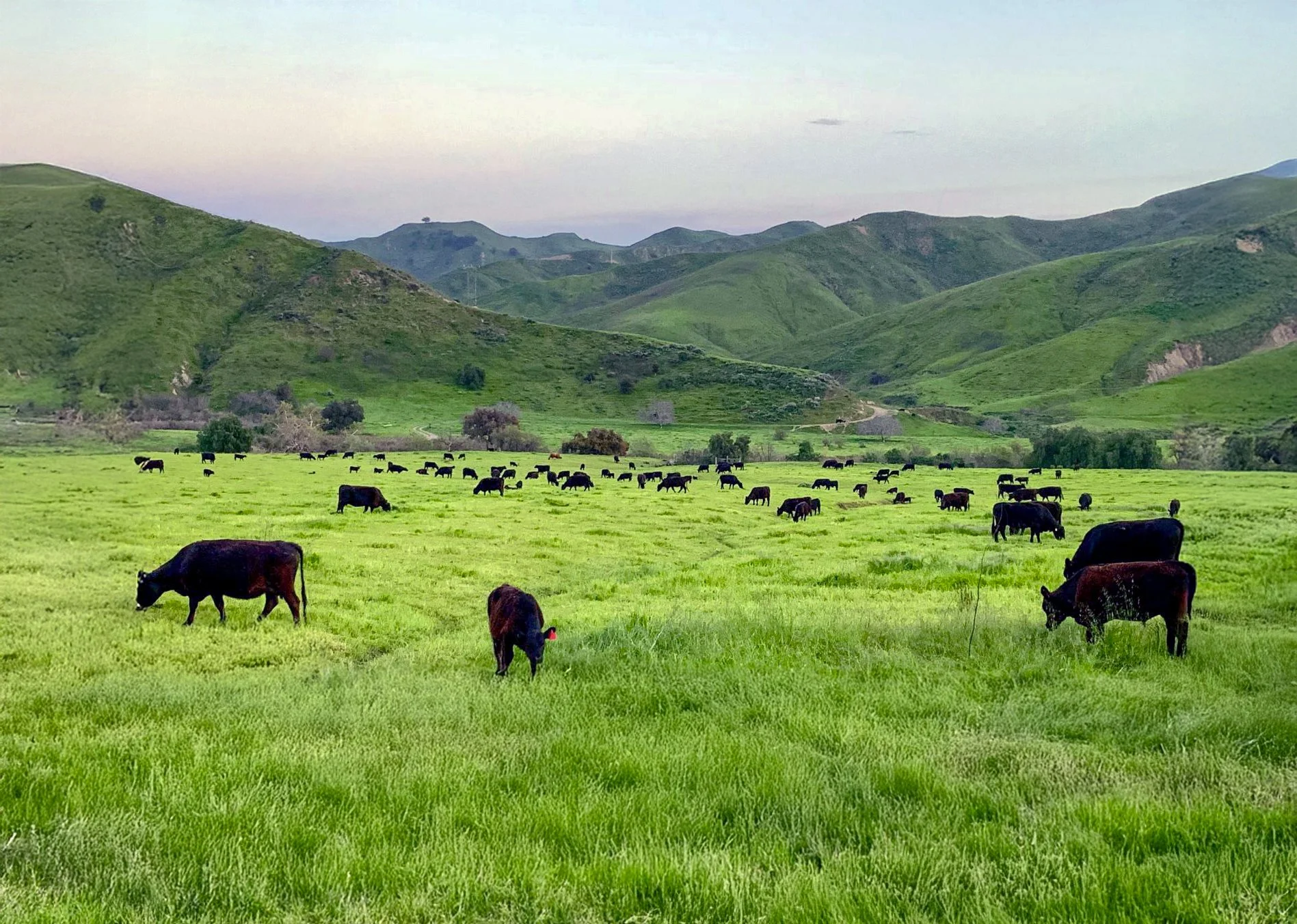
Photo by Sarah Perkins
As people start talking about the future of Rancho Cañada Larga, one question is on many minds: what will happen with the cattle?
It’s a fair question. These hills have supported cattle for generations, and grazing remains part of the landscape’s identity. Conservation practitioners have learned the hard way that one has to be very thoughtful and deliberate when altering land management practices that have been around since before statehood. Cattle will continue to be part of the picture as the Ojai Valley Land Conservancy studies how best to care for and restore the property’s diverse habitats. To better understand the current operation, OVLC staff sat down with Kim Perkins and his daughter, Sarah Perkins, who have worked cattle here, on and off, for decades. Their story offers a look at the practical work behind grazing and how it might evolve alongside conservation goals in the years ahead.
Kim Perkins’s connection to California ranching stretches back three generations. His grandfather once owned the Alisal Ranch near Solvang before the family moved inland to the Santa Ynez Valley. Kim bought his first place near Cachuma Creek in 1969 and began building his ranching career by leasing small pastures across the Central Coast. Over the years, he managed herds on large ranches such as Rancho San Julian and, eventually, here at Rancho Cañada Larga.
By the mid-1980s, Kim had learned the rhythm of Ventura County’s Mediterranean climate, from cool, wet and green winters to long, hot and dry summers. He has weathered them all with quiet persistence and a working patience that has become second nature. “It’s a tough ranch,” Kim said, looking toward the hills. “But it’s good country when you take it year by year. Every season asks something different of you.”
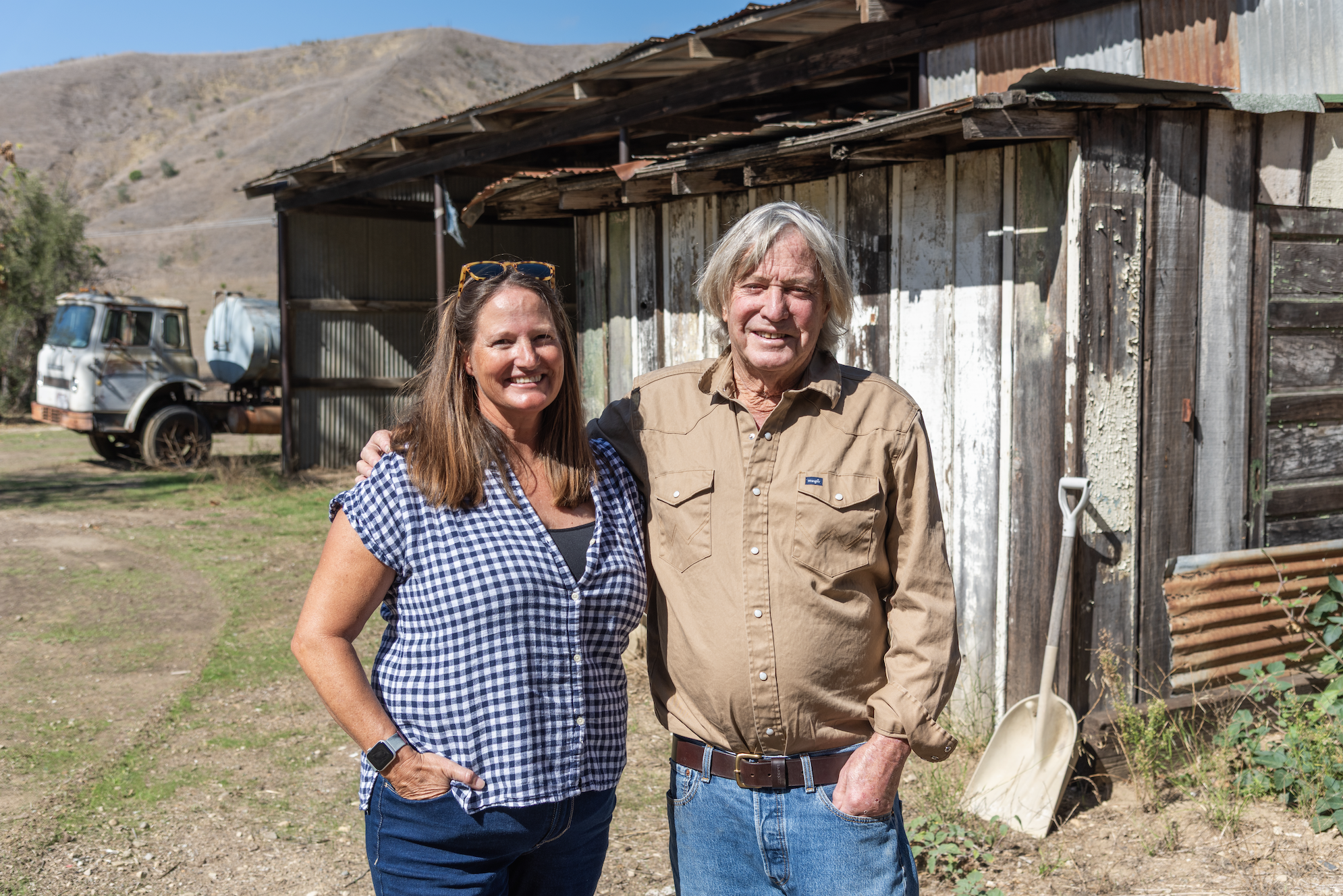
Sarah Perkins and her father Kim, longtime cattle managers at Rancho Cañada Larga
Sarah Perkins brings both education and heart to the operation. After graduating from the Thacher School she earned a Bachelor’s degree in Fruit Science with a concentration in Water Science and Water Law from Cal Poly San Luis Obispo, followed by graduate work in animal science and genetics through a joint Cal Poly and UC Davis program. Her studies combined water systems, soil management, and animal physiology; knowledge that now shapes how she approaches the ranch. “I thought I’d get away from animals,” Sarah said with a laugh. “I tried studying water and soils and everything that supports life from the ground up, but I missed the animals too much. I realized I loved seeing how everything connects: the land, the water, the cattle, and how each decision you make ripples through the system.”
That perspective drives her management style. Sarah embraces state of the art animal husbandry such as genetic monitoring and careful recordkeeping to build a herd suited to both the cold, irrigated pastures of Modoc County and the rugged hills of Ventura. Her focus on calm, healthy cattle means less stress on the herd and fewer impacts on the land.
Each year, the Perkins family moves their cattle between their irrigated ranch to the north in Modoc County to the winter range here at Rancho Cañada Larga. Calving usually happens in the early winter in Ventura, where the climate is mild and the grass germinates earlier. In April/May when the landscape begins to dry out here, the herd trucks north to the irrigated meadows in Surprise Valley in Modoc County. That seasonal rhythm, Kim says, is what keeps both landscapes healthy. “Our whole plan is based on what the land tells us,” he explained. “You can’t force it. Some years we leave early. Some years we wait. You adjust.” “Flexibility is everything,” Sarah added. “Ranching teaches you to pivot. You can’t know what next year will bring.” Rather than rigid schedules, they rely on observation: resting pastures after grazing, watching how grasses recover, and maintaining enough cover to protect young plants and hold soil moisture through summer.
Ranching in the foothills comes with constant challenges, and much of the Perkins family’s approach is shaped by what the land can support in a given season. One area where OVLC’s restoration goals align with their longstanding management practices is in improving how water is distributed across the ranch. Kim explained that previous work with Natural Resource CS brought a new water line up into the higher country, which has made it easier to rotate cattle and rest different areas of ground. Reliable upland water points help cattle spread out naturally, reducing concentrated use along creeks and giving the pastures time to recover. It’s a practical example of how ranch operations and habitat restoration can move in the same direction.
Roads tell a similar story. Floods and heavy rains can blow out roads and cut off access to remote pastures for weeks. After major storms, Kim and Sarah sometimes take on the road repairs themselves just to move cattle safely. “It’s the part people don’t see,” Kim said. “You can’t care for the land if you can’t reach it.” Both Kim and Sarah pointed to practical improvements such as relocating corrals to more functional sites and continuing targeted weed management for plants like artichoke thistle and castor bean, which have taken hold in some areas due to past disturbance and roadside dumping. Addressing these non-native species supports better forage conditions and a more resilient grassland system overall. “You see how the land responds,” Sarah said. “Small changes can shape what comes back and how the cattle use the landscape.”
In a place as dynamic as Rancho Cañada Larga, the landscape itself is always shifting. Kim has watched creek channels scour clean in big winters, hillslopes slump, oaks seed new groves in unexpected places, and wildlife return after fire and drought. “Every ten years or so, the creek just resets itself,” he said. “That’s the nature of it here: steep country, big water, constant change.” Kim and Sarah’s lived observations are vital as OVLC and its partners begin studying the ecological conditions of the ranch. Understanding how the land and natural communities respond to weather, grazing, and time will help guide future restoration planning.
Rancho Cañada Larga has been a working ranch for a very long time, and as conversations continue about its future, questions about grazing are expected. Some wonder whether the cattle will stay; others want to know how grazing and restoration can coexist. Sarah says she often hears those questions firsthand. “People stop along the road to watch the calves in spring,” she said. “They’ll ask what’s happening, and I tell them the cattle move north in summer when the grass dries up and come back once the green feed returns. It’s just part of the seasonal cycle here.” That willingness to talk about what they do, and why, helps demystify ranching for visitors and neighbors alike. OVLC’s Executive Director, Tom Maloney, says that curiosity is a good sign. “It shows how much people care about this landscape,” he said. “As we look ahead, the goal is to listen and learn how the land functions, how it responds, and how management decisions can support its recovery and resilience.”
OVLC’s mission is to protect and restore Ojai’s natural landscapes forever. That includes open space, wildlife habitat, and, at times, lands that remain active and productive. As discussions about Rancho Cañada Larga continue, OVLC will take time to observe before making any major management changes. Grazing will remain one of several tools used to manage non-native grasses and reduce wildfire risk, but its role will be guided by ecological study and adaptive management. Kim and Sarah understand the need for the long view. They have seen the land change with weather, drought, and flood, and they continue to adapt with care and intention. “You just keep trying to do right by the ground,” Kim said quietly. “That’s all any of us can do.”
The future of Rancho Cañada Larga will unfold with care, patience, and continued attention to what the land itself reveals.
Nathan Wickstrum, Communications & Outreach Manager